
Experiencing Lent With Our Children
Dear Holy Comforter parents and families,
It was good to see many of you at our Shrove Tuesday pancake dinner and our Ash Wednesday service.
Lent has begun. This season is similar to Advent in that it’s a season of waiting and preparation, and both share the color purple in the liturgical calendar.
For the last few years, I’ve found myself a little anxious in the weeks leading up to Lent, and I think it has to do with the desire to experience the time in a genuine and purposeful way with the hope that it yields spiritual growth and closeness to God, while also knowing and accepting that these seasons are always different when lived with children. I invite you (and myself) to ease up on any self-imposed pressure to experience Lent in a certain way, or in ways that you may have experienced before having kids. Instead, we can simply trust that God is with us and loves us and is forming us as we desire Him and seek a posture of humility and readiness.
Lent is a time of preparation for Easter, and that’s something that young children can understand (with our help). What they often can’t quite connect with (yet) are ideas like mortification, repentance, and reconciliation, as these are often too mature for them. It’s important that we lead our kids in a way and at a level appropriate to their age and maturity. For example, if my family decides that one of our Lenten practices will be forgoing cafe outings (premium coffee and bakery goodies), I’ll just tell my two-year-old, “If Dad can’t have espresso during Lent, you can’t have a croissant.” Just kidding. We’ll simply avoid cafes, and if we pass one on a walk or on our way to the park and “someone” asks if we can go inside for a little smackerel of something sweet, we can talk about how right now we’re waiting for Easter and the big feast that we’ll get to enjoy with friends and family when we celebrate God’s love for us through Jesus’ death, burial, and resurrection.
The three most common formation practices during Lent are prayer, fasting, and almsgiving. We may also choose to participate in other formative acts such as studying or memorizing scripture, seeking reconciliation, self examination and repentance. It’s easy to take on too many things in an effort to “really do Lent” and then get caught up in our performance (or failure). Consider trying to incorporate one practice from each of the three areas. I gave some examples below to get the ideas flowing.
Prayer
Prayer is one of the most fundamental parts of being human, yet I can so easily neglect it.
Ways to add prayer to the family routine
Pray before a shared meal, before bed, or before the family gets caught up in the day
Take turns leading the prayer
Write out a prayer
Practice silence with a timer
One way to experience prayer is to include a tactile element. For example,
Using prayer beads
Going on a prayer walk
Creating something like needlework or ceramics
Fasting
It’s easy to forget how excessive our food and drink habits can be, and how normalized that’s become.
Fasting from food and drink
Caffeine, soda, alcohol
Sweet snacks, desserts, treats, baked goods
Meat
Dining out
We often think of fasting as just related to food and drink, but there are plenty of modern things from which we can fast that often distract us and consume moments that would otherwise be experienced with quiet, stillness, and waiting.
Entertainment
Music, podcasts, streaming services
News media
Conveniences that reduce human connection e.g. online grocery shopping
Conveniences that have negative impacts on God’s creation e.g. single use plastic, excessive driving
It can also be helpful when fasting to replace the forgone act with something else. Examples:
Forgo dining out; create a thoughtful meal plan to prioritize healthful food and shared meals
Forgo family outings that require a lot of driving; plan family activities at home or at places that are accessible by walking and biking (or public transit)
Almsgiving
We may choose to give more financially during lent.
A gift to someone we interact with often e.g. our mail carrier, a grocery store clerk, a bus driver
A donation to an organization working for good in our communities
There are also non-financial ways of giving we may consider.
Make a meal for someone (and even eat together!) that you’ve never connected with.
Use our time in volunteering
Pick up trash in the neighborhood
Give away clothes, books, kid toys (now is your chance to get rid of all of those stuffies your kids never play with)
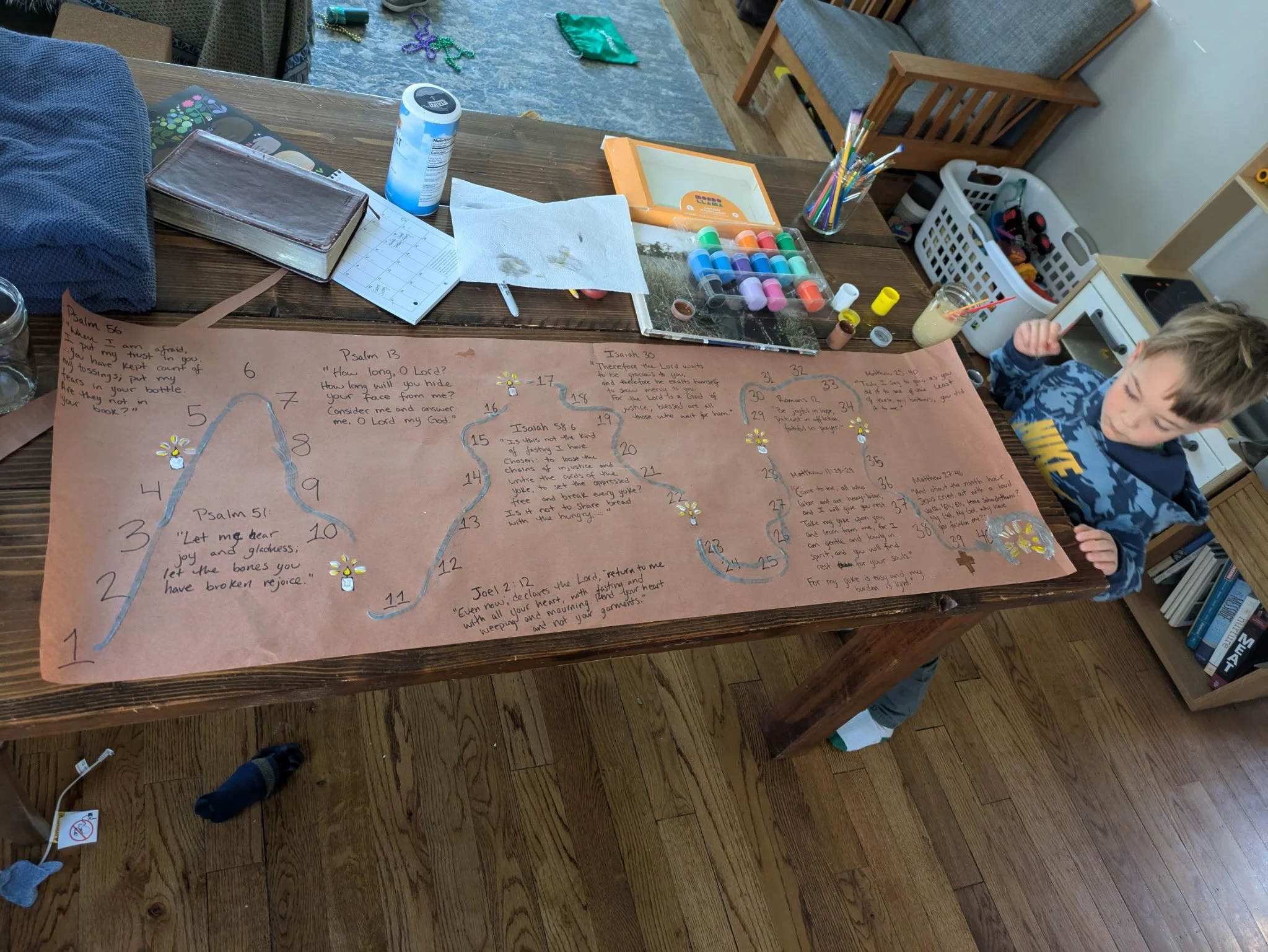
Lent can feel long, and children can have a hard time conceiving time. To address this, our family had an art project last year to mark the season and count down the days to Easter. On a large piece of butcher paper, we drew a winding path and wrote out the days of Lent, broken up by mini candles to represent our mini feast days on Sunday with a culmination of the empty tomb on Easter Sunday. We included scripture verses for meditation throughout the path. When we remembered, we’d cross off the days as we went as a sort of homemade “Lenten” calendar instead of an Advent calendar. It was a great activity to help the season feel less like repeating daily checklists.
We have butcher paper available. If you’d like a sheet send me a message and I'll bring it on Sunday.
I’m so grateful to be in community with all of you and share in this first Lenten season at Holy Comforter. I anticipate a lot of beautiful thoughts from the kids and look forward to moving through this season together as a church family.
Grace and peace,
Matt